

Mixing Cabinet Styles: A Bold Approach That Actually Works

Updated: Aug 29

Modern kitchen design is increasingly focused on personalization and function. Instead of sticking to one cabinet style, you may consider mixing finishes, colors, and door profiles to create kitchens that feel more custom, balanced, and visually interesting.
When done right, combining cabinet styles can elevate the entire space—adding contrast, defining focal points, and creating a design that feels intentional rather than repetitive.
If you want to see how these different options look in person before committing, you can compare separate manufacturer displays and view material samples side-by-side at our kitchen and bathroom remodeling showroom.
Is It OK to Mix Cabinet Styles?
Yes—mixing cabinet styles is a well-established design approach that allows for a more personalized and visually balanced kitchen.
It can help you:
Highlight key areas like islands, pantries, or range walls
Combine styles like shaker and flat-panel for a transitional look
Blend modern and traditional elements in a cohesive way
Add contrast and depth without making the space feel cluttered
When done thoughtfully, mixing cabinet styles can make a kitchen feel more custom, layered, and functional.
What to Watch for When Mixing Styles
While mixing styles can elevate a design, consistency still matters.
Using cabinets from different sources can sometimes lead to subtle visual differences, such as:
Door alignment and spacing
How far doors extend past the cabinet frame
Variation in finish tones or sheen
These small inconsistencies may not seem noticeable at first but can affect how cohesive the final kitchen looks once everything is installed.
Understanding Cabinet Overlay Differences
Another detail that impacts the final look is cabinet door overlay.
Full overlay cabinets cover most of the cabinet frame, creating a more seamless and modern appearance
Standard overlay leaves more of the frame visible, giving a more traditional look
Overlay styles can also vary depending on whether cabinets are framed or frameless, which can slightly change spacing and alignment.
Paying attention to these details helps ensure that mixed cabinet styles still feel intentional and visually consistent. Each cabinet manufacturer may have differences in door overlay.

How to Mix Cabinet Styles
When mixing cabinet styles, one of the biggest design decisions is how your kitchen island contrasts with the surrounding cabinetry.
There’s no single “correct” answer—it depends on your layout, lighting, and the overall look you want to achieve. However, a few design approaches are used consistently because they work well visually.
Darker Island, Lighter Cabinets
This is one of the most popular combinations in modern kitchens.
A darker island—such as navy, sage green, matte black, or espresso—can:
Anchor the space visually
Create a strong focal point
Add depth to lighter cabinet layouts
This contrast is especially effective in open-concept kitchens, where the island becomes both a functional and visual centerpiece.
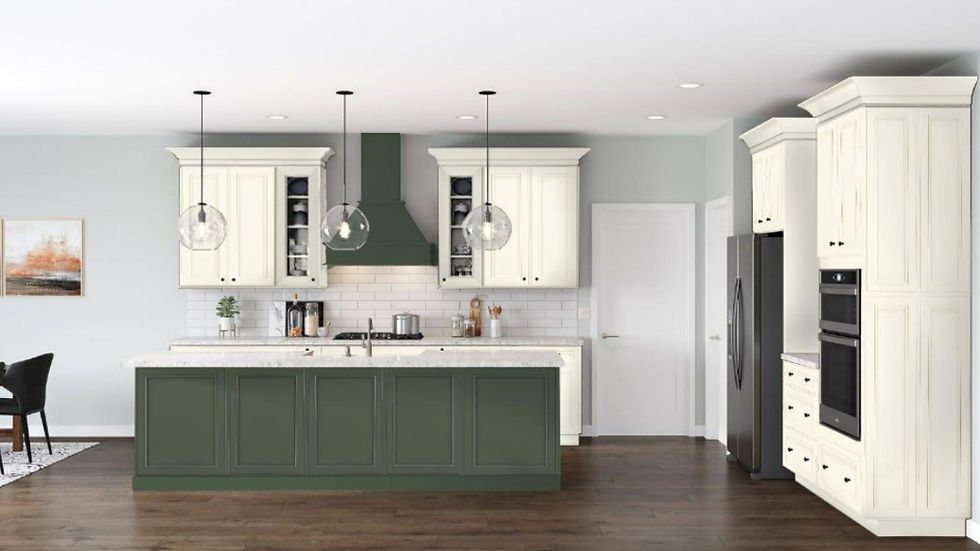
This helps the island stand out as a functional and design centerpiece.
Different Upper and Lower Cabinets
Using different styles or colors for upper and lower cabinets is one of the most effective ways to create contrast while maintaining balance.
This approach keeps the kitchen feeling lighter at eye level while adding visual weight and depth below.
This strategy keeps kitchens light above and grounded below.
Examples:
Cream uppers with natural wood or charcoal lowers
White upper cabinets with navy or sage green base cabinets
Light stained wall cabinets and black cabinets for the perimeter

Why This Approach Works
Separating upper and lower cabinets visually can:
Prevent the space from feeling too heavy
Add dimension without overwhelming the design
Make the kitchen feel more open and balanced
Lighter uppers reflect more light, while darker lowers help ground the space.
Combine Kitchen Cabinet Door Styles
You don’t need to stick to a single cabinet door style to achieve a cohesive kitchen design. Mixing door profiles can add subtle variation and make the space feel more custom without overwhelming the layout.

Mixing Shaker and Flat-Panel Cabinets
One of the most common and effective combinations is pairing shaker and flat-panel cabinets.
Shaker base cabinets add structure and depth
Flat-panel cabinets introduce a cleaner, more modern look
This combination works well because it balances detail with simplicity, allowing variation without making the design feel disjointed.
Using Door Styles to Create Visual Balance
Mixing door styles is most effective when one style is dominant and the other is used as an accent.
This helps:
Maintain a cohesive overall look
Avoid visual clutter
Create intentional contrast instead of randomness
Keeping the variation subtle ensures the kitchen feels designed—not mismatched.
Blend Cabinet Finishes and Textures
Mixing finishes and textures is another effective way to add depth and visual interest to your kitchen without changing the overall layout.
Combining smooth and natural materials can make the space feel more layered and intentionally designed.
Popular Finish and Texture Combinations
Painted matte finishes (such as white or charcoal) paired with natural woodgrain textures like oak or walnut
Textured melamine base cabinets combined with solid painted wall cabinets
These combinations introduce contrast while maintaining a clean and modern look.
Why Mixing Textures Works
Blending finishes helps:
Add warmth to the space
Break up flat or uniform surfaces
Create a more dynamic, high-end appearance
The key is balance—too many competing textures can feel busy, while the right combination feels cohesive and refined.

Tips for Mixing Cabinet Styles Without Overdoing It
Mixing cabinet styles works best when the design feels intentional rather than random. A few simple guidelines can help keep everything balanced and cohesive.
Keep One Style Dominant
Start with one primary cabinet style and use a second style as an accent. This creates contrast without making the kitchen feel disjointed.
Limit the Number of Finishes
Using too many colors or textures can overwhelm the space. Sticking to two main finishes or styles helps maintain a clean and controlled look.
Maintain Consistent Proportions
Even when mixing styles, the layout should remain balanced. Keeping consistent spacing, alignment, and proportions ensures the design feels cohesive.
These principles help create a kitchen that feels thoughtfully designed rather than visually cluttered.
Explore Cabinet Style Combinations
If you're considering mixing cabinet styles, seeing different combinations together can make it easier to understand what works and what doesn’t.
You can explore cabinet styles, finishes, and layout ideas in more detail on our kitchen cabinets page


